Alcohol and Zero Tolerance (DSGBV)

Key facts
DSGBV prevalence
- The 2022 Sexual Violence Survey found that 40% of adults have experienced sexual violence at least once in their lifetime.
- Research by Women’s Aid found that 1 in 5 young women and 1 in 11 young men have experienced intimate partner abuse.
- According to Women’s Aid ‘Femicide Watch’, 276 women died violently between 1996 and the present day (as of 30th September 2025).
Alcohol & DSGBV
- Studies from Australia found that alcohol is involved in about 30-40% of both intimate partner and family violence.
- National research on domestic abuse in intimate partner relationships found that alcohol was a trigger for abusive behaviour in 34% of cases.
- Past national research found that alcohol was a factor in up to 70% of cases of domestic violence against women.
Alcohol availability & DSGBV
- A two-hour reduction in late-night trading hours in New South Wales, Australia, was found to reduce reports of domestic violence by 29%,
- A one-hour extension of licencing hours in Northern Ireland led to a 17% increase in alcohol-related crime.
Addiction & DSGBV
- According to the Saol Project report, ‘In Plain Sight’, at least 11,000 women in Ireland struggling with addiction are also experiencing domestic violence, with almost 50,000 having endured these simultaneously at some stage in their lives.
Children & DSGBV
- Research examining the presence of both child maltreatment and intimate partner violence found that they occurred during the same period in 45%–70% of studies.
Alcohol, sport & DSGBV
- International research demonstrates links between domestic violence and big sporting occasions with their associated marketing and increases in alcohol consumption.
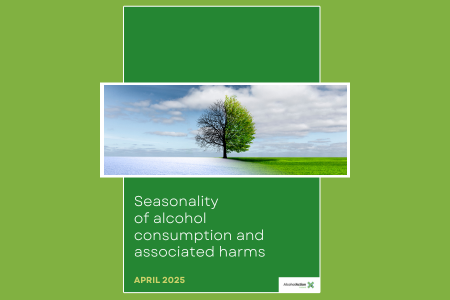
Seasonality of alcohol consumption
- Alcohol consumption in the population is found to vary through the months of the year, with increased consumption, including sporadic heavy drinking occasions, occurring during holidays, festivals, large sports events, and public holidays – such as Christmas, Easter, St. Patrick’s Day, or the summer holidays. This seasonality in consumption has a harmful, knock-on effect on public health, crime and violence, drink driving and road traffic collisions, suicide and self-harm, and DSGBV.
Recommendations
Reduce population level alcohol consumption
- Reduce whole-of-population alcohol consumption, through controls on pricing, marketing and availability, as a strategy for reducing violence against women – as recommended by the World Health Organization.
Include alcohol in DSGBV strategies
- Ensure alcohol is included in any strategy to reduce DSGBV.
- Adopt clear primary objectives in relation to alcohol regulation and licencing to prevent DSGBV.
- Deliver evidence-based reforms to address availability and access, including regulations on licenced premises density, operating hours, online sales, and advertising.
Tackle problematic drinking
- Implement gender-informed alcohol policy changes that reduce problematic drinking patterns.
- Challenge social norms that trivialise men’s harmful drinking and behaviours.
Co-ordinate across agencies
- Ensure close co-ordination across multiple agencies in relation to services such as addiction, child and family services, domestic and sexual violence supports.
- Work with Cuan, the Domestic, Sexual and Gender-Based Violence (DSGBV) Agency, and other organisations, on a framework to ensure the development of an integrated and focused effort to address the role of alcohol in DSGBV.
Implement Operation Encompass
- Implement ‘Operation Encompass’, a police-led, school-based early intervention safeguarding scheme to support children and young people who experience domestic abuse, across all schools in Ireland.
Data, training and gender-specific services
- Improve data collection in relation to DSGBV, including recording if the perpetrator used alcohol prior to the crime.
- Ensure training for youth workers and those working in early years services regarding alcohol and DSGBV.
- Secure the rollout of gender specific DSGBV services.
Ban sports sponsorship
- Ban sports sponsorship by alcohol companies.
The staff at Move see daily the significant danger many women and children are exposed to by living with DSGBV, and we understand that alcohol can lead to detrimental outcomes and accelerate risk.
Indeed, in 2023 we found that drug and alcohol use was a factor in 50% of the cases referred to us. Therefore, what we can say is that alcohol use is one of the most consistent risk factors for domestic violence.
MOVE CEO Dr Michelle Walsh
Alcohol Action Ireland is clear – the starting point for any conversation regarding alcohol and Domestic, Sexual and Gender-Based Violence (DSGBV) is to state unequivocally that alcohol is not, and never will be, an excuse or explanation for DSGBV.
Many people consume alcohol and do not perpetrate violence against their partner or children, and not all who perpetrate domestic violence use alcohol.
Unfortunately, what we do know is that alcohol acts as a commercial accelerant of violence and research shows that, in incidences of DSGBV, it appears the role of alcohol is one of a facilitative nature, a contributing factor.
We also know that parental problem alcohol use is a well-known gateway to other adverse childhood experiences including domestic violence and sexual abuse.
Key facts
- The 2022 Sexual Violence Survey found that 40% of adults have experienced sexual violence at least once in their lifetime.
- Research by Women’s Aid found that 1 in 5 young women and 1 in 11 young men have experienced intimate partner abuse.
- A two-hour reduction in late-night trading hours in New South Wales, Australia, was found to reduce reports of domestic violence by 29%.
- An extension of licencing hours in Northern Ireland has led to a 17% increase in alcohol-related crime.
- Studies from Australia found that alcohol is involved in about 30- 40% of both intimate partner and family violence.
- National research on domestic abuse in intimate partner relationships found that alcohol was a trigger for abusive behaviour in 34% of cases.
- Past national research found that alcohol was a factor in up to 70% of cases of domestic violence against women. Research examining the presence of both child maltreatment and intimate partner violence found that they occurred during the same period in 45%–70% of studies.
- According to the Saol Project report, ‘In Plain Sight’, at least 11,000 women in Ireland struggling with addiction are also experiencing domestic violence, with almost 50,000 having endured these simultaneously at some stage in their lives.
Alcohol Action Ireland is calling for government and policy makers to acknowledge this problem and implement progressive policies to prevent and respond to, DSGBV, as well as strategies aimed at reducing alcohol consumption.
The current DSGBV Strategy is due to end in 2026, and AAI is seeking the inclusion of the following in a new strategy:
Inclusion of alcohol in a new DSGBV strategy
- AAI are calling for the role of alcohol, as a commercial accelerant of domestic violence, to be acknowledged and included in the new strategy.
- This also means the strategy should include systematic data collection of instances where alcohol has been involved in a crime, especially DSGBV incidents.
Victim and child-centred supports
- Services and supports for victims of DSGBV must prioritise the safety, dignity, respect and independence of victims and survivors. This must also include children who have witnessed domestic violence, who are victims in their own right.
Consistent, simple referral pathways for victims and children
- Clarity, accessibility, and consistency are essential components for effective referral pathways for victims and for children. Unfortunately, current pathways can be unnecessarily complicated when a victim of DSGBV also has an alcohol use problem. This must end and a new strategy needs to ensure the development of uniform referral pathways across all services.
- Additionally, pathways must be sensitive to victims of DSGBV who have alcohol use problems and are also mothers.
Collaboration and coordination across government departments, State-agencies, and services
- Effective prevention and response to DSGBV requires strong, regionally balanced collaboration and coordination across government departments, local government, state-agencies, DSGBV organisations, health services, education services, addiction services, and NGOs/charities. Perpetrator programmes must be extended and include programmes for all perpetrators, regardless of gender.
- Reducing alcohol consumption across the whole of population should be a whole of government goal.
It is important to acknowledge that the presence of alcohol or drug use in an abusive relationship is a complicating factor that not only makes it more difficult for both the victim survivor and perpetrator to receive support but also leads to increased risk of serious injury or homicide.
Women who use alcohol or drugs are 2 to 5 times more likely to experience gender-based violence than the general population. For many their experience of substance use and domestic abuse is inextricably linked.
Rachel Fayne, SAOL co-ordinator
Listen
See our Alcohol & DSGBV report series below

Read the National Centre for Domestic Violence paper on domestic abuse and use of alcohol
This analysis of 63,046 witness statements shows that alcohol is frequently referenced within survivor narratives of domestic abuse, appearing in 42.6% of cases. At the same time, the majority of statements do not mention alcohol, reinforcing a critical and well-established point within the evidence base: alcohol use does not need to be present for domestic abuse to occur.
More on the National Centre for Domestic Violence here
We need your help!
If you would like to help our campaign for a Health Impact Assessment of the Sale of Alcohol Bill please fill in the form below and separate, personalised emails will be sent to each of your local TDs.
There is a pre-filled message you can sign, or feel free to write your own.
It only takes a minute!
Thank you