Alcohol industry's corporate social responsibility
Alcohol’s true nature
Alcohol is no ordinary commodity; it is a depressant drug with significant physical and mental health implications for those who use it. Its consumption is found to play a causal role in more than 200 diseases, injuries and other health conditions.[i] As has been well documented, alcohol-attributable conditions show a dose-response relationship with volume of alcohol use – the more alcohol consumed, the higher the risk of disease and harm. This is the true nature of the product which the alcohol industry sells.
However, as knowledge grows about the harmful consequences of alcohol use, and as governments increase activities to protect public health and the public purse, the alcohol industry has invested significant resources to promote itself as a legitimate partner in reducing alcohol harm and consumption.
Sophisticated campaigns
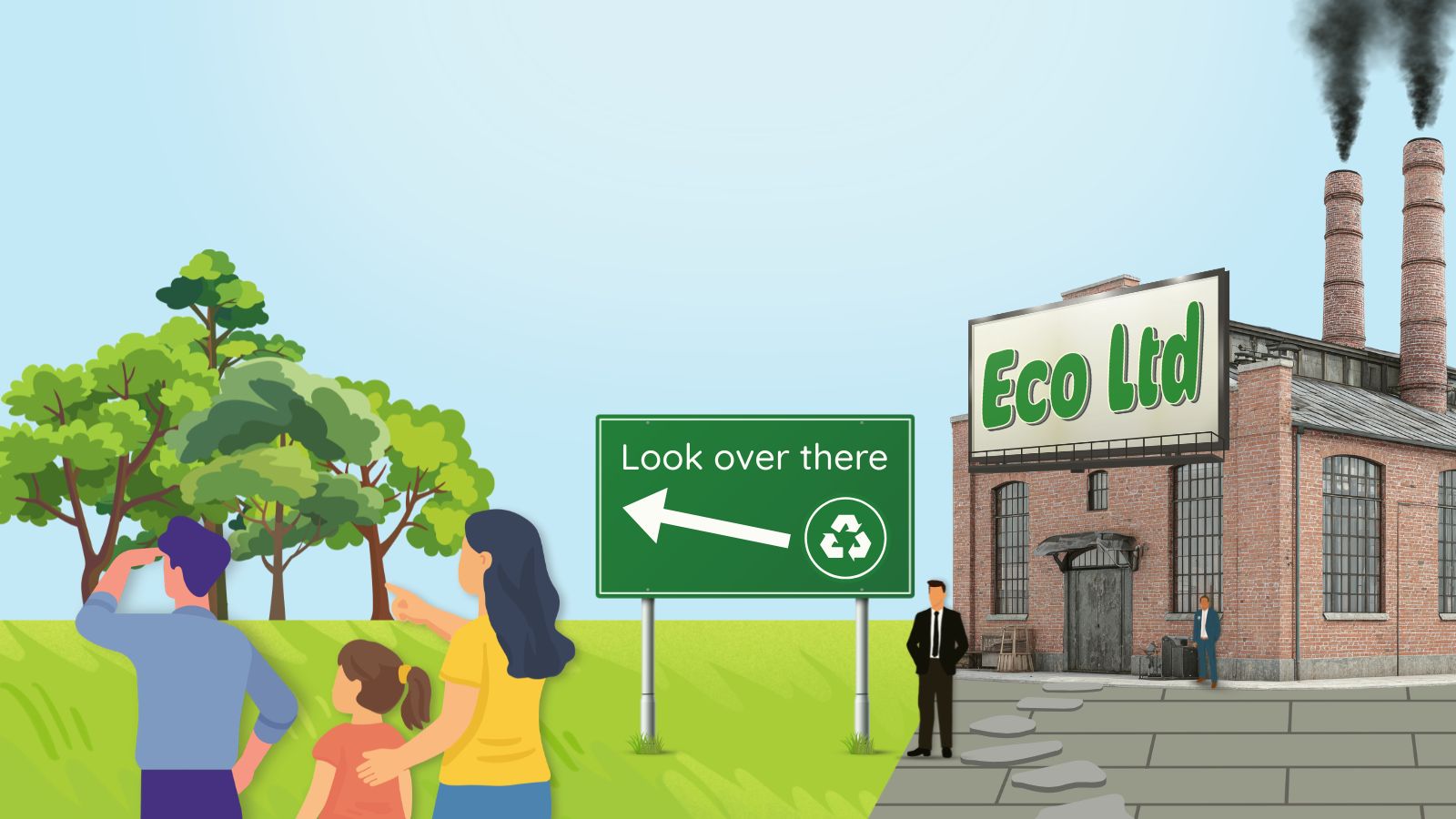
These ‘corporate social responsibility’ (CSR) initiatives are sophisticated campaigns by global alcohol companies that promote them as good corporate citizens, and attempt to frame arguments to their own ends, such as focusing on the personal responsibility of the drinker rather than the producer and supplier of alcohol,[ii] and more recently, focusing on zero-alcohol products as a harm reduction measure.
Front groups
Organisations that carry out these activities on behalf of the industry are known as Social Aspects Public Relations Organizations (SAPROs). SAPROs are “front groups” of risk industries, such as alcohol, tobacco, and gambling industries and seek to forestall regulation and prioritise industry profits over public health.[iii] Such a situation has led the WHO to state that when commercial actors, like the alcohol industry, are able to avoid the costs that arise from their health harming products, they undermine public health and wellbeing.[iv]
SARPOs, for their part, operate on behalf of the alcohol industry at an international level and the most well-known include organisations such as Drinkaware, Drinkwise, the International Center for Alcohol Policies, the Foundation for Advancing Alcohol Responsibility and the International Alliance for Responsible Drinking (IARD). As research has shown, SAPROs “position themselves ingeniously and can confuse media outlets, policy makers and the public, which often assume the information is coming from an independent reliable source.”.[v]
Academics contend these organisations[vi] are designed to skew scientific evidence, placing doubt while furthering their own interests, and suggest that they may pose a threat to public health.[vii] As noted by Dr Margaret Chan in 2013, then director-general of the World Health Organization: “Tactics include front groups, lobbies, promises of self‐regulation, lawsuits and industry‐funded research that confuses the evidence and keeps the public in doubt. This is formidable opposition.[viii] Indeed, Ireland witnessed one of these tactics first hand in the industry’s opposition to health information labels on alcohol products.
Science for sale
Following the mandating of health information labelling under the Public Health (Alcohol) Act 2018, there was evidence of a concerted effort by industry to denigrate the well-established scientific findings that alcohol causes cancer and liver disease, through bodies such as Drinks Ireland, citing reports they had commissioned from authors and organisations, such as the Gradient Corporation.[ix] It should be noted that the work of the Gradient Corporation has been called ‘science for sale’ and their workers labelled ‘rented white coats’.[x]
As Dr. Chan further noted – market power readily becomes political power, and governments seldom prioritise public health over commercial interests. Industries use donations, sponsorship, and philanthropy to position themselves as respectable corporate citizens, while shifting responsibility for harm onto individuals and framing regulation as an attack on personal freedom and choice.[xi]
Recently, the industry and its proxies have began to push zero-alcohol products as a harm reduction measure. As previously witnessed with the tobacco industry promoting vaping as a smoking cessation tool, the alcohol industry portrays these products as a solution for alcohol use or a harm reduction strategy for heavy alcohol users, but currently, as highlighted by the World Health Organisation (WHO) there is little evidence for this.[xii] The drinks, the WHO says, have possible drawbacks and implications, such as misleading minors, pregnant women, abstainers or those seeking to stop drinking about their actual ethanol content.[xiii] For example so called zero-alcohol products may contain up to 0.5% ABV. [xiv] [xv]
Divergence
However, a striking divergence exists between how zero-alcohol products are described publicly, as tools for moderation, and how they are presented in industry-facing publications, as tools to drive market growth and increase main brand sales.[xvi] Research examining communications from major alcohol companies found that while corporate responsibility reports frame zero-alcohol products as supporting responsible consumption, executives in trade and business publications discuss the same products as mechanisms for expanding into new markets, targeting new drinking occasions, and competing with soft drinks and other non-alcoholic beverages.[xvii]
In Ireland, the Health Service Executive has had a policy, since 2015, which states that it does not partner with the alcohol Industry on public health information in any way. [xviii] The Department of Health has also made it clear that it is not appropriate for any health providers to work with industry-funded organisations, a position which is supported by the Department of Education and Skills. However, in Ireland, Drinkaware still seeks to insert itself into a range of public health initiatives[xix] and some health services having indirect associations with alcohol companies.[xx]
Approaches
While individual countries will take different approaches, globally, there is a need to learn from the public health campaigns against tobacco. It has been suggested that a difference in perception of the alcohol and tobacco industries has allowed alcohol corporations to participate in the global governance arena in a way in which tobacco is no longer able.[xxi]
As tobacco is regulated by the Framework Convention on Tobacco Control (FCTC), which regulates the sale, use and marketing of tobacco products, so too must the price, promotion and availability of alcohol be governed through a global framework such as the FCTC. Until this happens, the alcohol industry will continue to engage in lobbying, influencing, donating, obfuscating – in order to protect shareholder interests and business revenues to the detriment of public health.
[i] World Health Organization. (2024, June 28). Alcohol. https://www.who.int/news-room/fact-sheets/detail/alcohol
[ii] European Centre for Monitoring Alcohol Marketing. (2021). The seven key messages of the alcohol industry (Rev. ed.). https://eucam.info/wp-content/uploads/2021/07/The-seven-key-messages-of-the-alcohol-industry-2021-07-spreads-1.pdf
[iii] Pietracatella, R., & Brady, D. (2020). A new development in front group strategy: The Social Aspects Public Relations Organization (SAPRO). Frontiers in Communication, 5, Article 24. https://doi.org/10.3389/fcomm.2020.00024
[iv] World Health Organization (2025). World report on social determinants of health equity: executive summary. World Health Organization. https://doi.org/10.2471/B09387.
[v] Robaina, K., & Babor, T. F. (2014, August 5). ICAP’s metamorphosis: From analysis, balance, and partnership to industry lobby group? Movendi International. https://movendi.ngo/blog/2014/08/05/icaps-metamorphosis-from-analysis-balance-and-partnership-to-industry-lobby-group/
[vi] Miller, D., & Harkins, C. (2010). Corporate strategy, corporate capture: Food and alcohol industry lobbying and public health. Critical Social Policy, 30(4), 564–589. https://doi.org/10.1177/0261018310376805
[vii] Babor, T. F. (2009). Alcohol research and the alcoholic beverage industry: Issues, concerns and conflicts of interest. Addiction, 104(Suppl. 1), 34–47. https://doi.org/10.1111/j.1360-0443.2008.02433.x
[viii] Chan, M. (2013, April 11). Re: Doctors and the alcohol industry: An unhealthy mix? [Rapid response]. The BMJ. https://www.bmj.com/content/346/bmj.f1889/rr/640534
[ix] World Health Organization, Regional Office for Europe. (2024). Commercial determinants of noncommunicable diseases in the WHO European Region. https://www.who.int/europe/publications/i/item/9789289061162
[x] Heath, D. (2016, February 8). Meet the ‘rented white coats’ who defend toxic chemicals. Center for Public Integrity. https://publicintegrity.org/environment/meet-the-rented-white-coats-who-defend-toxic-chemicals/
[xi] UN News. (2013, June 10). Global efforts to promote health face serious challenges from ‘big business’ – UN official. https://news.un.org/en/story/2013/06/441852
[xii] World Health Organisation. (2023). A public health perspective on zero- and low-alcohol beverages. Available at: https://www.who.int/publications/i/item/9789240072152
[xiii] World Health Organisation. (2023). A public health perspective on zero- and low-alcohol beverages. Available at: https://www.who.int/publications/i/item/9789240072152
[xiv] Government of Ireland. (2018). Public health (Alcohol) Act 2018. Available at: https://www.irishstatutebook.ie/eli/2018/act/24/section/2/enacted/en/html
[xv] Government of Ireland. (2023). Finance Act 2003. Available at: https://www.irishstatutebook.ie/eli/2003/act/3/section/73/enacted/en/html
[xvi] Edwardes, F., Keric, D., & Stafford, J. (2025). ‘Zero-alcohol’ products and the guise of responsibility. Journal of Public Health Policy, 47(1), 142–151. https://doi.org/10.1057/s41271-025-00607-4
[xvii] Edwardes, F., Keric, D., & Stafford, J. (2025). ‘Zero-alcohol’ products and the guise of responsibility. Journal of Public Health Policy, 47(1), 142–151. https://doi.org/10.1057/s41271-025-00607-4
[xviii] Health Service Executive. (2015). HSE policy on public health information initiatives related to alcohol. https://www.drugsandalcohol.ie/26972/
[xix] Alcohol Action Ireland & Alcohol Forum. (2021, March 9). Alcohol education in our schools cannot be out-sourced to an alcohol industry funded organisation. Alcohol Action Ireland. https://alcoholireland.ie/alcohol-education-schools-cannot-sourced-alcohol-industry-funded-organisation/
[xx] St James’s Hospital Foundation. (2025, July 1). Diageo joins forces with artist to launch Liberties Fun Run. https://supportstjames.ie/2025/07/01/diageo-joins-forces-with-artist-to-launch-liberties-fun-run/
[xxi] Hawkins, B., Holden, C., Eckhardt, J., & Lee, K. (2018). Reassessing policy paradigms: A comparison of the global tobacco and alcohol industries. Global Public Health, 13(1), 1–19. https://doi.org/10.1080/17441692.2016.1161815